Freelancers used to max out at some point. One developer, one set of hands, a fixed number of billable hours. You could manage five clients before the plates started falling.
That ceiling is moving. Freelancers who've built an AI-assisted workflow are running more clients, shipping faster, and doing it without burning out — because they're spending less time on the work that doesn't require their expertise.
This is the stack that's making it possible.
The core AI stack for freelance developers
For coding: Cursor or Claude Code
AI-assisted coding has moved from party trick to genuine multiplier. Cursor gives you an editor that understands your project and writes alongside you. Claude Code runs from the terminal and handles larger refactors, debugging sessions, and anything that benefits from a wider conversation.
The payoff is real: code that would have taken two hours gets done in forty minutes. You're not burning out staring at the same function for an hour. You move to the next thing.
For content and copy: Claude or ChatGPT
Proposals, project scopes, client update emails, landing page copy for your own site — these used to eat a chunk of every week. With a good prompt, a solid first draft takes minutes. You still edit. The voice is still yours. But the blank page problem disappears.
For admin: Zapier or Make
Invoice reminders, project status updates, client onboarding sequences — these can all run on autopilot. A basic automation stack handles the recurring admin that used to require a virtual assistant or, more honestly, just got forgotten.
The gap nobody's talking about
Here's what all of that still doesn't solve.
When a client finds a bug on their site, they email you. "Something's broken on the homepage." No browser. No device. No screenshot. No URL. You ask for details. They reply a day later. You go back and forth twice more. By the time you understand the bug, you've spent 40 minutes on something that took 10 minutes to fix.
That loop is pure waste. It's not billable. It's not interesting. And it happens multiple times a week across every client you manage.
AI doesn't fix this — because the problem isn't on your side. It's on the client's.
How Lantern closes the loop
Lantern is bug tracking built for freelancers managing multiple client sites. It does three things worth knowing about.
Structured reports instead of vague emails. Each client gets a portal — a unique link where they submit issues with title, description, urgency, and optional Loom video. Browser and device are captured automatically. "Something's broken" becomes a reproducible bug report. You get everything you need on the first try.
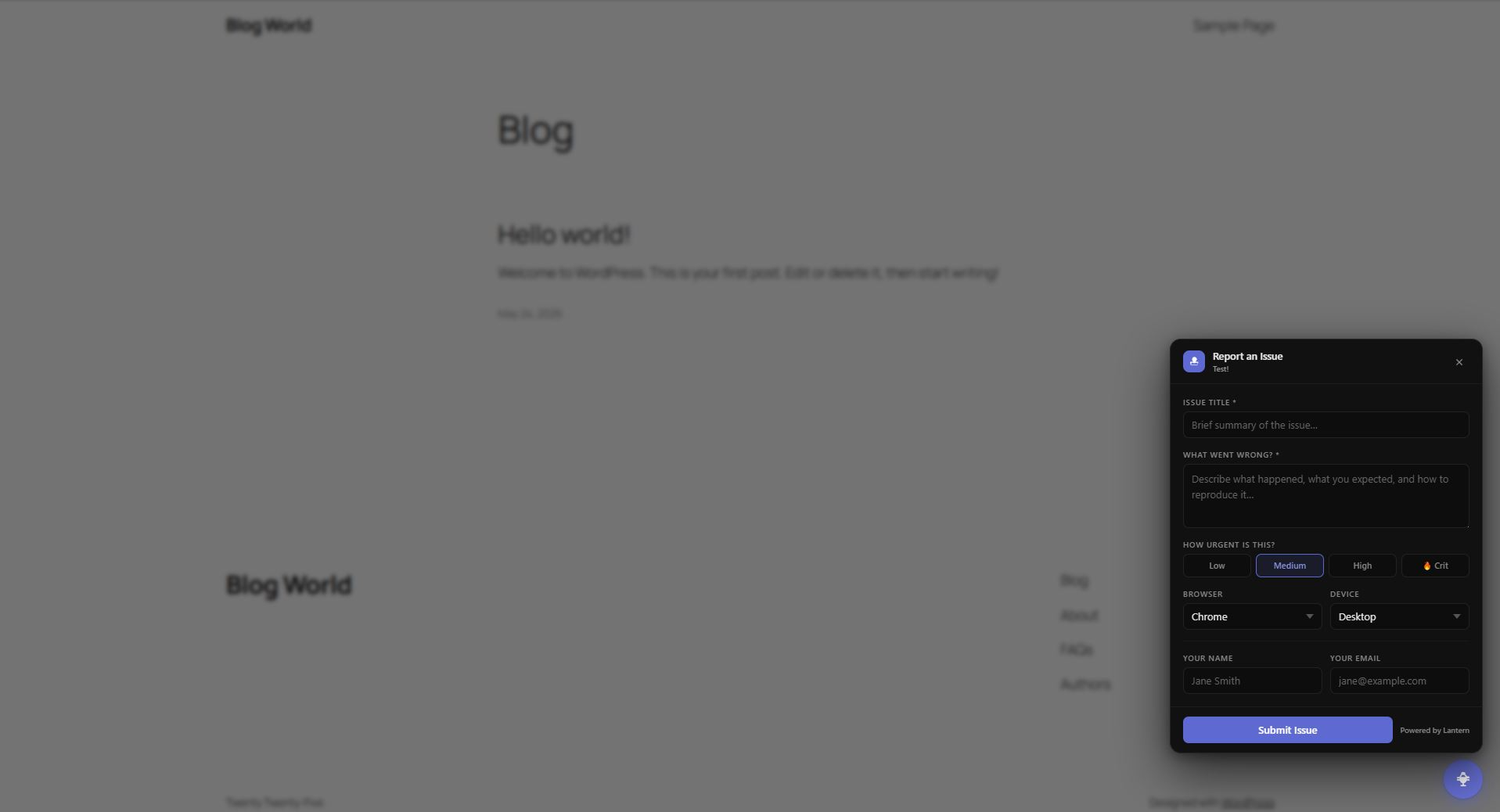
An embedded widget inside their WordPress admin. If your clients are on WordPress, the Lantern plugin adds a floating bug report button directly inside their WordPress admin area. It appears when they're logged in. Regular visitors never see it. Your client spots a bug while browsing their own site, clicks the button, fills the form — without opening a new tab or remembering a link.
MCP integration with Claude. This is where it connects back to your AI stack. The Lantern MCP lets you query and manage client issues from inside Claude — without switching to the dashboard.
What the workflow actually looks like
Your client logs into their WordPress site. The contact form is returning an error. They click the Lantern button in the corner, record a 30-second Loom, and submit. The issue lands in Lantern, scoped to their project.
You're deep in Cursor working on something else. You ask Claude:
"What new issues came in today?"
Claude:
One new issue — Acme Corp. Contact form throwing a 500 on the payment step. High urgency. Loom attached.
You watch the Loom, reproduce the bug, fix it. Then:
"Mark the Acme contact form issue as fixed."
Done. You never left your editor. The client can see the status in their portal — they don't email asking for an update because the answer is already there.
The whole loop from "client finds bug" to "bug closed" without a single clarification email.
The advantage is real — if you close the loop
AI gives freelancers a significant head start on the work they can already do alone: code faster, write faster, automate the routine. But the developers pulling ahead aren't just using better coding tools. They've systematised the entire workflow — including the client-facing parts that used to be chaos.
If your bug reports still arrive over email, you're leaving hours on the table every month.
Start a free 14-day trial — no credit card required →
The Individual plan is £12.50/month and covers up to 5 clients. Setup takes under five minutes. Your clients don't need an account to report bugs.
Simple bug tracking for agencies. No credit card required.